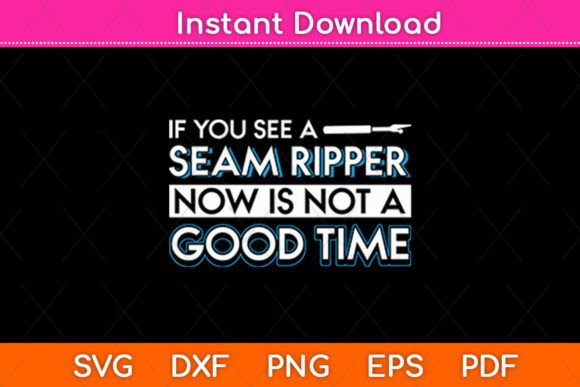
If You See a Seam Ripper Now Is Not a
As a designer who has spent years translating digital concepts into tangible stitched goods, I approach every new asset with a critical eye. When I first encountered the If You See a Seam Ripper Now Is Not a design, my immediate reaction was one of shared relief and humor. It captures that specific, frantic energy every sewer knows too well: the moment you realize a mistake is about to be made, or perhaps more accurately, the moment you are deep in the zone and cannot be disturbed. While the source file is marketed as a print cut file compatible with Cricut and Silhouette machines for Crafts and Graphics, my focus here is on how this concept translates when we move from vinyl cutting to actual machine embroidery.
The Visual Personality and Mood of the Design
At first glance, the layout of If You See a Seam Ripper Now Is Not a suggests a bold, statement-making piece. The phrase itself is long, which immediately dictates the shape and flow of the final project. In embroidery, text-heavy designs require careful consideration of line weight and spacing. If the original vector art features thick, blocky lettering, it will likely translate well into a dense fill stitch, creating a substantial look on heavier fabrics like denim or canvas. However, if the font is thin or script-based, we must be cautious about thread breakage and clarity.
The mood is undeniably playful and relatable. For a small shop product or an Etsy listing targeting hobbyists, this design speaks directly to the customer's identity. It isn't just a graphic; it is a badge of honor for anyone who spends time at their sewing machine. This emotional connection is crucial for handmade products. When a customer sees this on a tote bag or a sweatshirt, they aren't just buying fabric; they are buying a moment of recognition and community.
Real-World Application: From Digital File to Stitched Reality
Let’s imagine a real-life scenario where I am preparing a custom embroidered apron for a local craft fair. An apron is a perfect candidate for this design because it offers a large, flat surface area and is typically made of sturdy cotton or canvas. If I were to use If You See a Seam Ripper Now Is Not a on the bib of an apron, the message would stand out clearly. The visual appeal would be high, provided the text is sized correctly to ensure legibility from a distance.
Consider the stitching techniques required. To make the text pop, I would likely utilize a combination of satin stitch for the outlines and fill stitch for the body of the letters. This creates a professional finish that elevates the perceived value of the finished product. However, the density of the stitch count becomes a major factor. If the design is too dense, it can stiffen the fabric, making the apron uncomfortable to wear. Conversely, if the density is too low, the threads might show through on lighter fabrics, ruining the clean look.
This design also works exceptionally well for personalized gifts. Imagine a holiday gift for a friend who is learning to sew. A baby embroidery project featuring a smaller version of this phrase on a onesie could be adorable, though the text length would need significant reduction or rearrangement to fit the garment without distorting the message. For adult apparel, such as a sweatshirt embroidery project, the design fits naturally on the chest or back, serving as a conversation starter.
Navigating Challenges: Fabric, Hoop Size, and Placement
While the concept is strong, executing If You See a Seam Ripper Now Is Not a requires technical precision. One of the primary challenges is the hoop size. Because the phrase is lengthy, it may exceed the capacity of standard 4x4 inch hoops. If you are working with a smaller hoop, you will need to split the design into multiple sections, which risks misalignment if not handled carefully. Always check your machine's capabilities before committing to a large-scale project.
Fabric texture plays a pivotal role as well. On textured fabrics like fleece or heavy wool, fine details in the text can get lost. The stitches may sink into the pile, reducing clarity. In these cases, using a stronger stabilizer is non-negotiable. A tear-away or cut-away stabilizer provides the necessary backing to keep the stitches crisp and prevent puckering. Similarly, on stretchy fabrics like jersey knit, the tension must be dialed in perfectly to avoid distortion after washing.
Dark fabrics present another hurdle. If you are embroidering this design on a black t-shirt, white thread offers high contrast but can be prone to showing lint over time. Metallic threads might add flair but require special handling to prevent fraying. Testing the design on scrap fabric first is essential. Run a test in black and white mockups to visualize the contrast, then stitch a sample to inspect small details and confirm the thread colors work harmoniously with the background.
Commercial Viability and Brand Consistency
For the creative entrepreneur or digital product seller, understanding the commercial potential of If You See a Seam Ripper Now Is Not a is key. This design has high engagement potential because it targets a niche audience with passion. When used in boutique branding or as part of a collection of sewing-themed merchandise, it reinforces brand consistency. Customers trust businesses that understand their craft.
However, licensing is a critical step often overlooked. Before selling finished items or digital products based on this design, you must confirm the licensing terms. Many SVG files sold for personal use do not include commercial rights for embroidery conversion. Ensure you have the right to transform a print cut file into a machine embroidery design for sale. Using unauthorized assets can damage your reputation and lead to legal issues.
In terms of product value, a well-executed embroidery project commands a higher price point than a simple heat-transfer vinyl application. The tactile quality of the thread adds a layer of luxury and durability. Whether it is a kitchen towel, a pillow cover, or an embroidered patch, the craftsmanship signals quality. This is especially important for wedding gifts or personalized products where the recipient expects a lasting keepsake.
Practical Designer Notes for Success
To ensure your project succeeds, follow these practical steps:
- Test First: Always run a test on scrap fabric to check stitch density and alignment.
- Stabilize Properly: Use the appropriate stabilizer for your fabric type to prevent shifting and puckering.
- Check Contrast: Ensure the thread colors provide enough contrast against the fabric for readability.
- Verify Licensing: Confirm you have commercial rights before selling any finished goods or digital files.
- Inspect Details: Zoom in on your digital preview to catch any tiny gaps or overlaps in the lettering.
- Mockup Realistically: Compare light and dark fabric backgrounds in your printable mockups to predict the final look.
Ultimately, If You See a Seam Ripper Now Is Not a is more than just a funny slogan; it is a versatile design asset that, when executed with care, can elevate any handmade product. By paying attention to the technical nuances of embroidery—stitch density, fabric choice, and stabilization—you can turn this clever phrase into a professional, marketable item that resonates with fellow makers and craft enthusiasts alike.